Pocket Watch Gift Presentation: Chains, Leather Cases and Wooden Boxes
Compare what each pocket-watch package includes and how it changes carrying, unboxing and storage.
Compare quartz and mechanical model records, readable dials and confirmed cases when choosing contemporary pocket watches for gifts or retail.
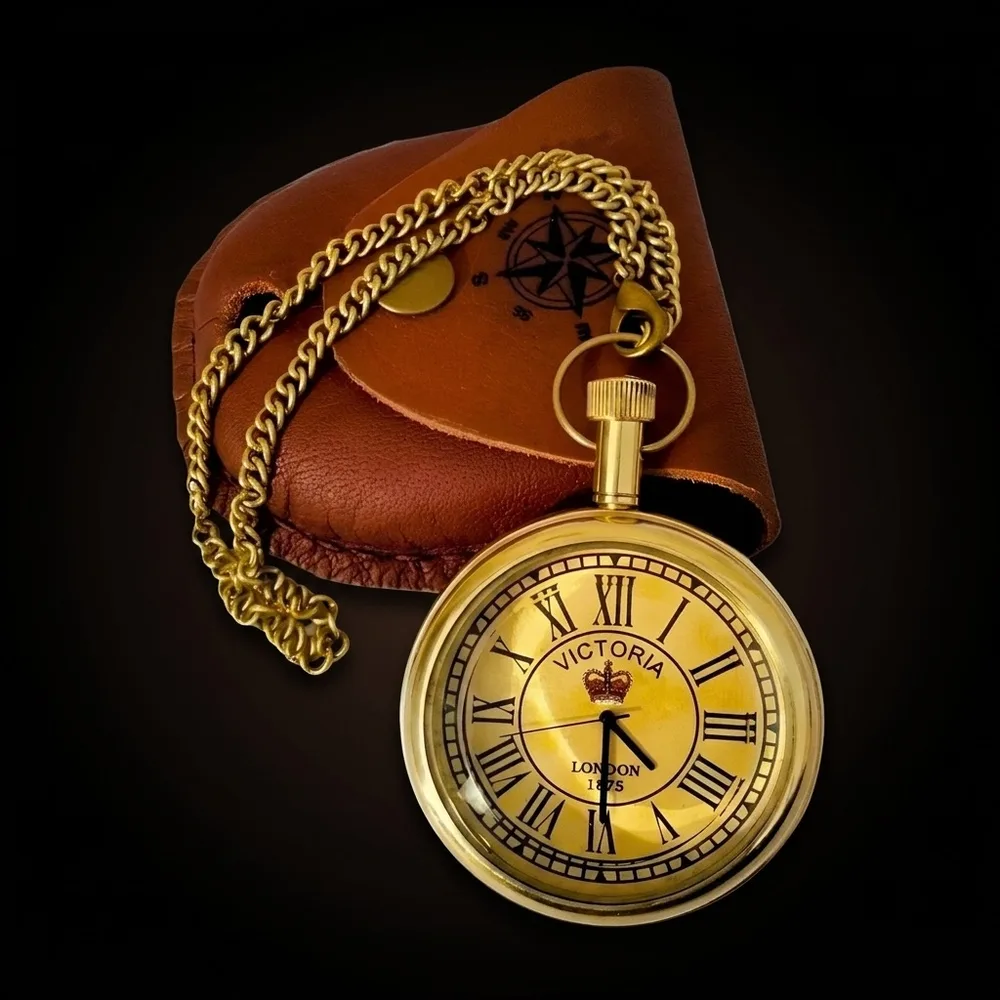
A pocket watch is a small object with a sequence built into it: take it out, open it where applicable, read the face and return it to a pocket or case. That sequence makes it an appealing personal gift. It also creates practical selection questions that a photograph of the closed case cannot answer.
Antiqula’s pocket-watch records include both quartz and mechanical movements, leather-case presentations, engraved motifs and a wooden-box set with a chain. Begin with the intended recipient and the verified movement. Then choose the case and presentation that fit how the object will be used and given.
A recipient may want to wear a pocket watch with a waistcoat, keep it as a personal keepsake or display it in a study. Those uses change which details matter. For wearing, attachment and pocket fit are important. For a display, the case shape and the way the dial is shown may carry more weight.
A themed engraving can give the gift a clear visual identity, but it should not overwhelm the practical questions. Ask how the watch opens, how its time is set and what instructions accompany it. A recipient should understand the object without having to guess at the operation of an unfamiliar crown or cover.
The gearx-38-1 record lists quartz movement and a leather case. Gearx-38-2, with a Marco Polo motif, lists mechanical movement and no outer case. Gearx-38-3 lists quartz movement, an included chain and a wooden presentation box. These are distinct model arrangements, not interchangeable variations of one package.
In general, conventional quartz and mechanical watches use different timekeeping systems and user routines. Manufacturer guidance such as Seiko’s basic watch instructions explains that distinction, but it does not provide operating instructions for an Antiqula model. Request the instructions for the actual watch, including its power or winding requirements. Do not guess a winding frequency, battery type or accuracy tolerance.
| Catalogue example | Listed movement | Listed presentation | Selection role |
|---|---|---|---|
| gearx-38-1 | Quartz | Leather case | A compact watch with a protective carrying presentation |
| gearx-38-2 | Mechanical | No outer case; Marco Polo motif | A themed watch where the case design carries the identity |
| gearx-38-3 | Quartz | Chain and wooden box | A complete presentation set for a gift brief |
Use the current product page to confirm these details before ordering. A model name, photo or general category statement should not replace the specific record. The comparison should remain accurate if a reader looks at only one row.
The selected examples are listed with two-inch cases. Case diameter and readable dial area are not the same measurement. Covers, borders and ornament can reduce the visible face. Look at the opened watch as well as the closed exterior, and ask for dial dimensions if readability is important to the recipient.
Consider contrast between the hands, markings and background. An elaborate face may be attractive at close range but harder to read quickly. For a retailer, make the open dial visible in the display or show a clearly identified photograph beside the closed object. Do not let the decorative back be the only information a customer sees.
A chain loop on a case is not the same as an included chain. Gearx-38-1 describes a loop for attachment; gearx-38-3 explicitly lists a chain in its package. Preserve that distinction in a gift brief. A buyer should not discover an accessory is missing after the watch has been wrapped.
Where wearing is intended, ask about chain length, clasp arrangement and attachment compatibility with the recipient’s clothing. Do not claim that one chain fits every waistcoat or pocket. Review the object as a complete wearing arrangement rather than as a case photographed in isolation.
A leather case can support carrying and storage. A wooden box can create a more structured unboxing and a place for the watch after it is given. A watch without an outer case may still be appropriate when the exterior motif is the central attraction. These are different experiences rather than a simple hierarchy of luxury.
Check lining, closure and the fit of included components. Ask whether transit packaging is separate from the gift presentation. A box that looks attractive on a table may still need protective packing around it for delivery. If several gifts are being sent, confirm the arrangement for the whole set rather than relying on one styled sample.
A stock motif and a proposed custom inscription are separate choices. The existence of an engraved design does not establish that any text can be added anywhere. Ask about the available surface, method, dimensions and proof process for the selected reference.
For a corporate gift, keep the artwork approval attached to the watch ID and intended orientation. A message should remain legible when the watch is held naturally, and it should not obscure an important design feature. Request current quantities and timing rather than repeating generic customisation claims from elsewhere on the main website.
Keep instructions for the movement separate from surface care. Do not open the case to adjust or service the mechanism without appropriate guidance. Water resistance should not be assumed from a closed metal body. Ask for the exact model’s handling limits and service arrangements where relevant.
For brass surfaces, the Canadian Conservation Institute warns that polishing can alter detail through abrasion. That matters where an inscription or aged finish is part of the object’s appeal. Follow finish-specific guidance and avoid treating the watch as an unfinished metal ornament. Protect leather, wood and the movement from any treatment intended only for the exterior metal.
A complete shortlist records the product ID, movement, case diameter, readable face, included chain or attachment, outer case and instructions. Add the approved inscription if one is requested. Review the sample in the order the recipient will encounter it: package, exterior, dial and operation.
The most thoughtful pocket-watch gift is easy to understand and appropriate to the recipient’s intended use. A clear movement description and an accurately specified package create more confidence than a historical-looking case accompanied by vague promises.
Catalogue reference: GearX 2.0. Listed material: Brass & Leather.
Check the current product page and ask for model-specific dimensions, packaging and suitability before ordering.
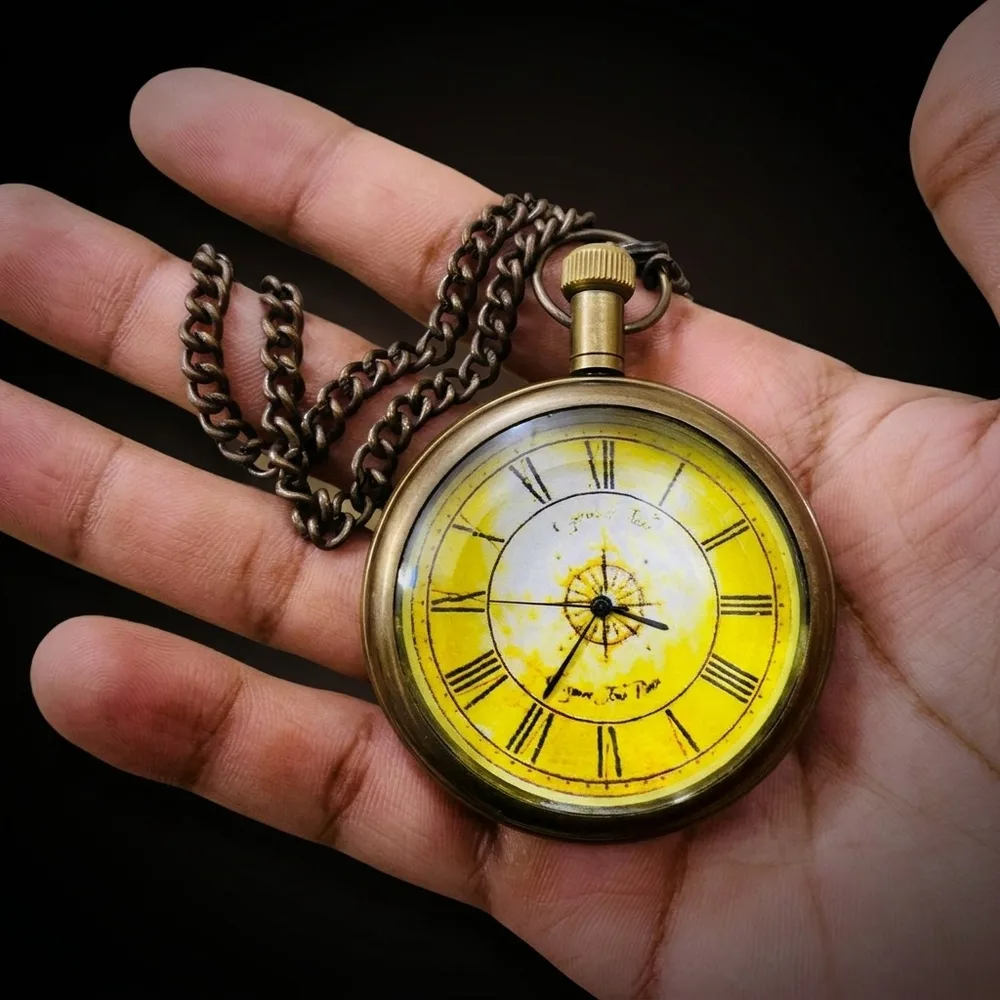
Catalogue reference: GearX 2.1. Listed material: Brass.
Check the current product page and ask for model-specific dimensions, packaging and suitability before ordering.
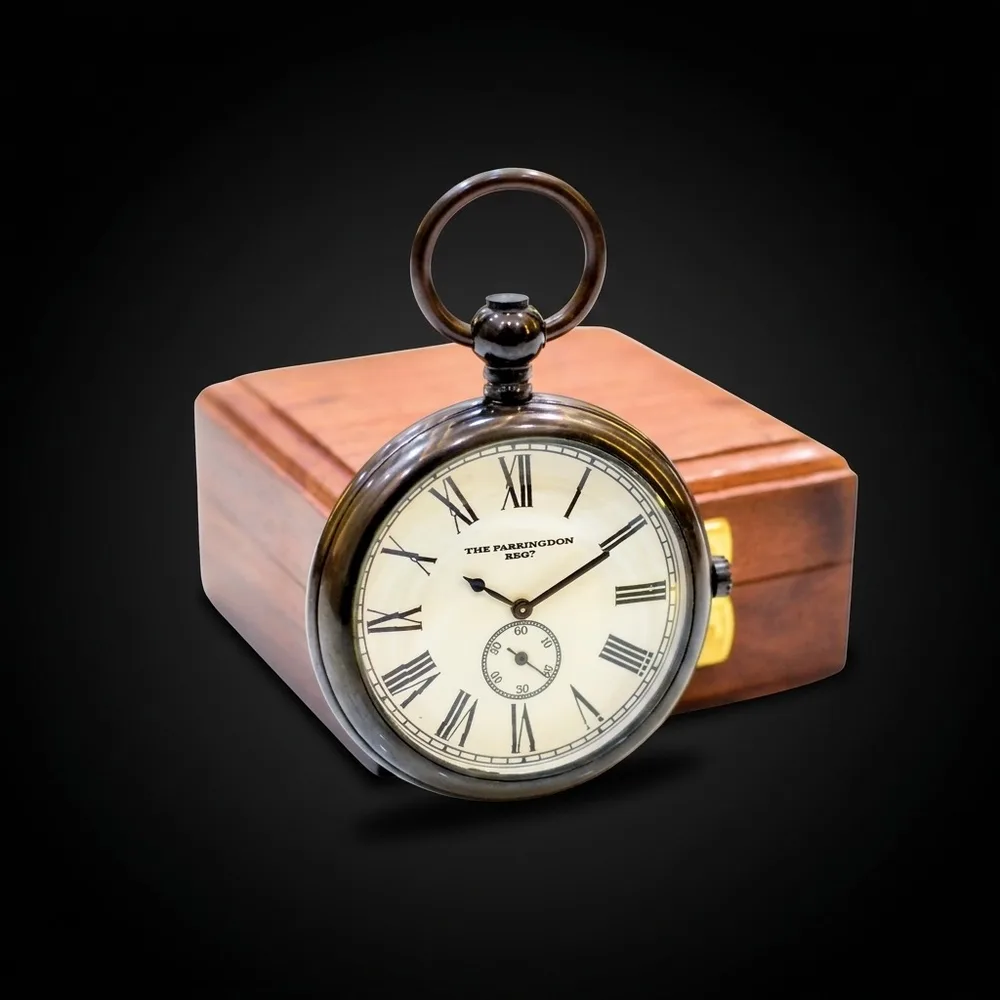
Catalogue reference: GearX 2.2. Listed material: Brass.
Check the current product page and ask for model-specific dimensions, packaging and suitability before ordering.
Explore Antiqula’s pocket watches catalogue
Catalogue examples were checked against Antiqula’s product records on 2026-10-02. Research sources provide context; they do not certify the performance of individual catalogue products.