Choosing a Brass Table Clock for a Desk, Shelf or Gift
Choose a desk clock by readability, viewing angle, case form and its verified movement, with clear distinctions between decorative and working compass details.
Compare table clocks, wall clocks, hourglasses, sundials and pocket watches. Practical guides to movements, placement, display and gift selection.
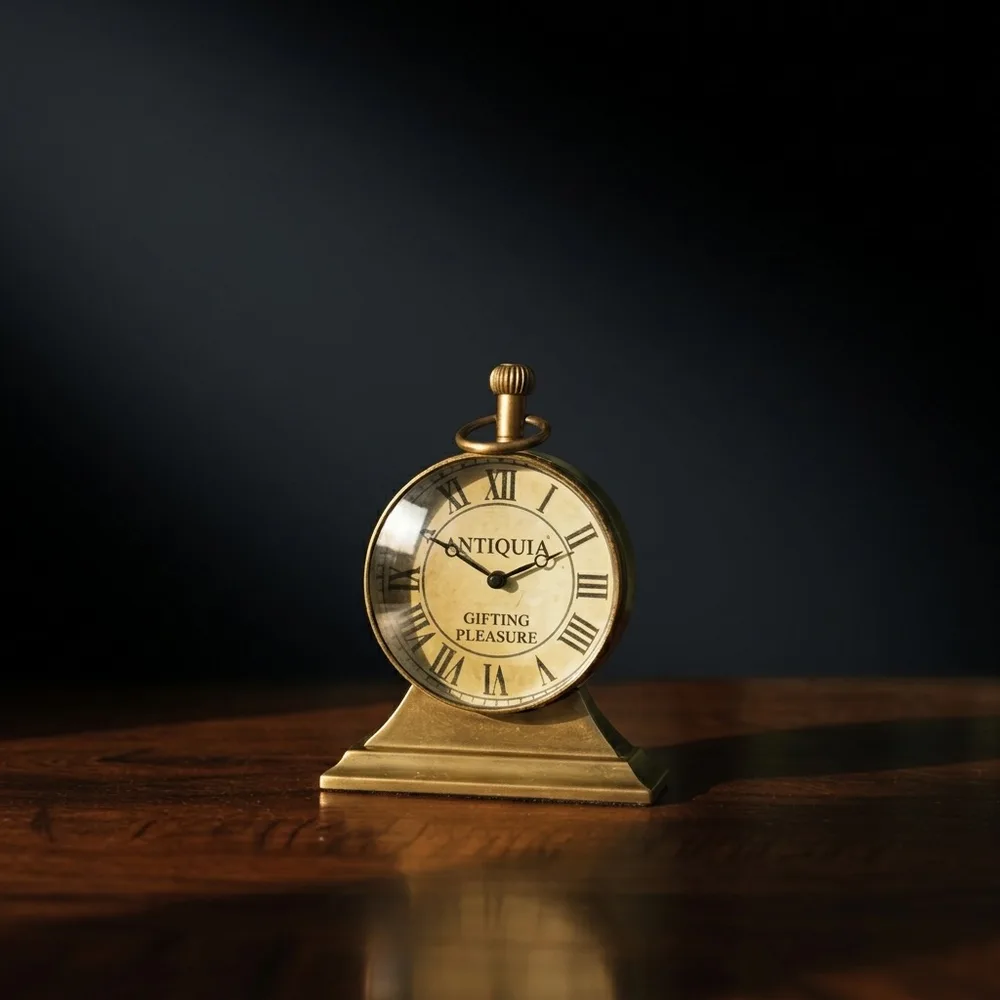
Choose a desk clock by readability, viewing angle, case form and its verified movement, with clear distinctions between decorative and working compass details.
Choose a desk clock by readability, viewing angle, case form and its verified movement, with clear distinctions between decorative and working compass details.
Understand decorative compass backs, separate working dials and simple clock faces before choosing a combined desk object.
Work from sight lines, face size and wall projection when selecting round, station-style or maritime wall clocks.
Choose a wall-clock format by the directions from which people approach it, including projection, access and readable face size.
Keep the interval, overall height and frame format separate when comparing hourglasses for an activity or interior.
Compare duration, frame, visibility and handling when selecting brass hourglasses for desks, shops and interiors.
Understand dial layout, orientation and presentation before choosing a sundial as a gift, teaching object or decorative instrument.
Separate apparent solar time, time zones and daylight saving before judging a sundial against a phone or wall clock.
Compare quartz and mechanical model records, readable dials and confirmed cases when choosing contemporary pocket watches for gifts or retail.
Compare what each pocket-watch package includes and how it changes carrying, unboxing and storage.