Double-Sided vs Single-Face Wall Clocks: Placement and Visibility
Choose a wall-clock format by the directions from which people approach it, including projection, access and readable face size.
Work from sight lines, face size and wall projection when selecting round, station-style or maritime wall clocks.
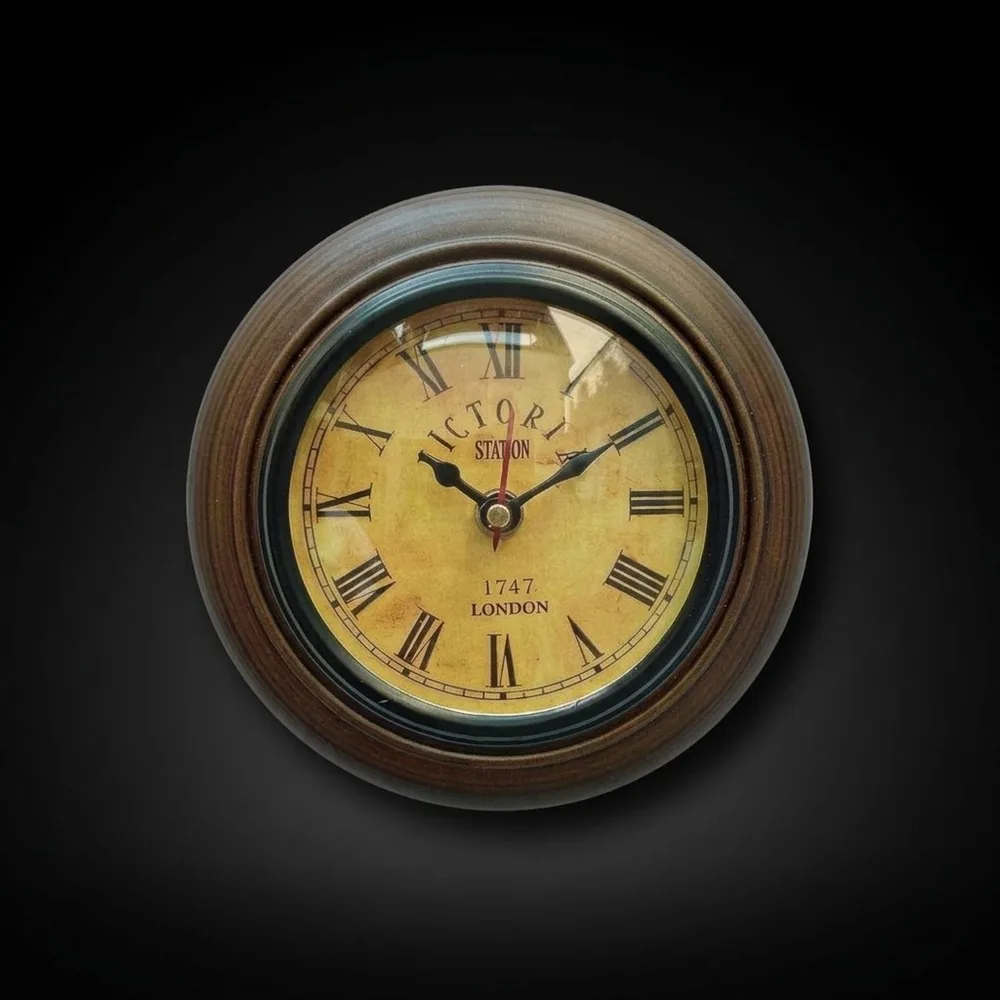
A wall clock is read from a route through a room, not just from the spot where it hangs. Someone may glance at it from a desk, a doorway or the far end of a corridor. Choosing a clock therefore begins with those sight lines. The style of its frame matters, but a striking frame cannot compensate for a face that is too small or badly placed.
Antiqula’s wall-clock category includes single-face rounds, projecting double-sided forms, ship-wheel designs and porthole styling. These are different spatial arrangements, not merely different decorations around the same dial. A clock mounted flat against a wall and one that projects from a bracket ask different things of the room and the mounting surface.
Stand where the clock will usually be read. Then identify the wall area that remains visible from that position. Furniture, an open door or a tall display can interrupt the sight line. If several positions matter, check each rather than assuming the wall is equally visible throughout the room.
A single-face clock works well when viewers look toward the wall. A double-sided clock can be useful where people approach along the wall from opposite directions. It is less useful if both sides would face into shelving or if the bracket would create an obstruction. Draw the viewing directions on a simple room sketch before choosing the form.
A ship-wheel frame may occupy a large circle while holding a much smaller time display. Antiqula’s dial-x-12-0 record lists an overall diameter of 11.5 inches and a four-inch clock face. Those dimensions describe two different visual jobs: the wheel creates the maritime outline, while the smaller face carries the information.
By contrast, a simple round frame may devote more of its overall area to the dial. Ask for both measurements where they are not clear. A buyer comparing only overall diameter can select a visually larger object with a less readable time display. Test legibility at the intended distance using a sample or a full-size paper mock-up.
| Form | Best spatial question | Important measurement |
|---|---|---|
| Single-face round | Can the wall be seen directly? | Readable face diameter |
| Double-sided station style | Are viewers approaching from two directions? | Bracket projection and overall height |
| Ship-wheel surround | Does the maritime frame have room to read clearly? | Frame diameter and separate dial size |
| Porthole styling | Is the frame a focal point or a supporting detail? | Body depth and access to the clock |
The table describes planning questions, not installation approval. A projecting form adds leverage and occupies space beyond the wall surface. Obtain its weight and fixing requirements before choosing hardware or deciding that a particular wall can support it.
Some catalogue records include estimated dimensions. Dial-x-10-1, for example, identifies its diameter as an estimate. Preserve that qualification in a shortlist and request an exact measurement before installation. Do not turn an approximate field into a precise building specification.
Likewise, the listed overall height of a bracketed clock may include its stand or decorative support. That is not automatically the face diameter or the projection from the wall. Ask for a drawing or a set of clearly labelled measurements if the object must fit a narrow corridor or a defined wall panel.
A readable dial depends on the relationship between the hands, markings and background. Decorative lettering can add character while also competing with the time display. Inspect the face at the likely distance and under the room’s ordinary light, especially if the clock has a glass cover.
A window opposite the clock can create reflections that hide the hands at certain times of day. Moving the clock slightly within the available wall area may help more than choosing a larger frame. Avoid placing it so high that readers must tilt their heads sharply or see the face at an awkward angle.
The selected examples are listed with Japanese quartz movements. That is catalogue information for those references, not proof that every item has identical noise, battery access or accuracy. Dial-x-6-0 specifically includes a silent-movement description; do not transfer that wording automatically to another clock whose record does not make the same claim.
For a bedroom, studio or quiet office, request a sample or a model-specific description of the sound. For a shop, ask how the power compartment and setting controls are accessed after mounting. Maintenance should be possible without damaging the bracket, face or surrounding display.
A railway-style clock can give a corridor a strong direction, while a simple wooden round may suit a reading room. A ship-wheel frame is more explicitly maritime. Use the design to support the room’s purpose rather than adding a historical story to every decorative detail.
Place names and dates printed on a contemporary dial are part of its styling. They do not prove manufacture in that city or year. Describe the object as vintage-style or a contemporary reproduction, and reserve a specific historical attribution for a design that has been documented through research.
Ask for the weight, fixing points, projection and supplied installation guidance. A competent installer should choose hardware for the actual wall construction and loading. Do not infer safe mounting from a photograph or describe a clock as easy to fit in every building. Public spaces also need clearance for people, bags and cleaning equipment.
For a double-sided form, include the space needed to open or remove any part during adjustment. Confirm whether the two faces have separate movements and how they are set; two visible dials do not explain the internal arrangement. That detail can affect routine maintenance and the staff instructions you keep with the display.
A useful shortlist includes viewing directions, readable face size, overall size, wall projection, weight, movement, sound information and access arrangements. Compare the design against the actual room sketch. Keep estimated values flagged until they are confirmed.
The strongest wall-clock choice combines a readable display with a form that belongs in its setting. A carefully placed modest clock can serve the room better than a dramatic object selected without checking the sight lines.
Catalogue reference: DialX 6.0. Listed material: Wood.
Check the current product page and ask for model-specific dimensions, packaging and suitability before ordering.
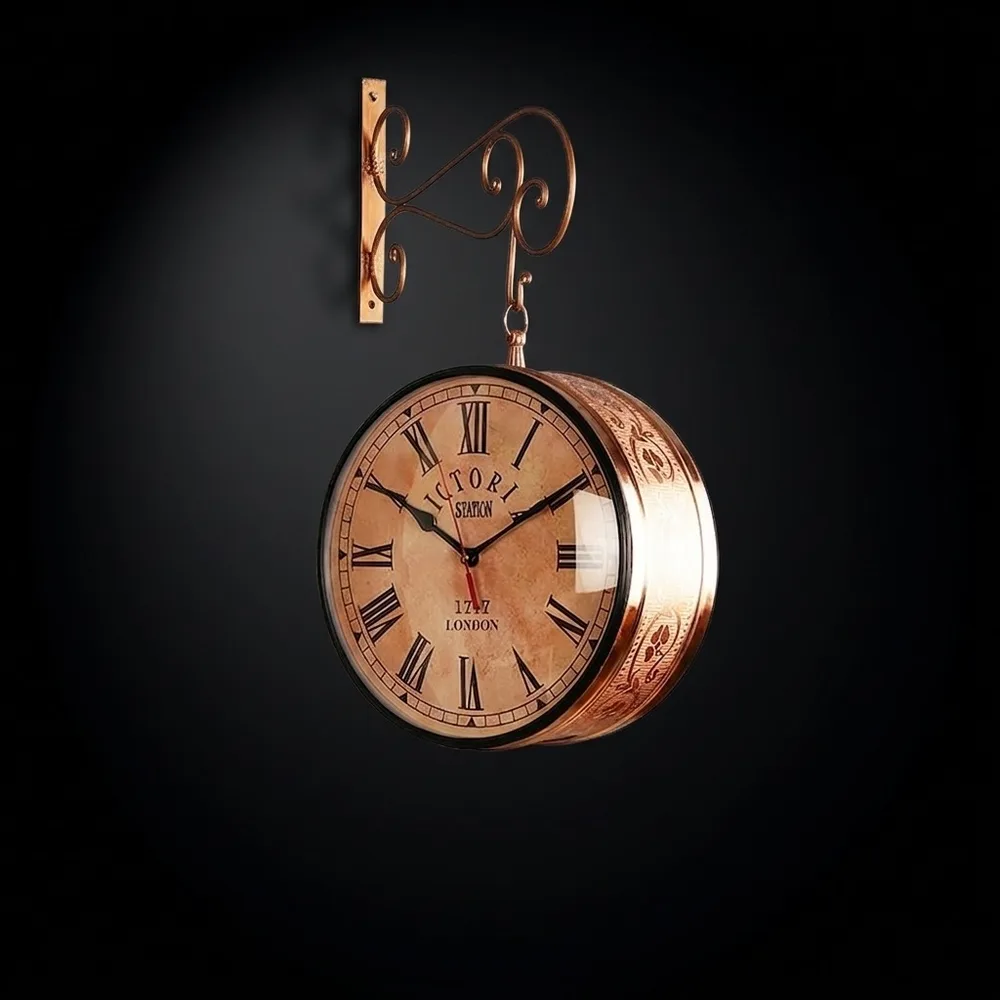
Catalogue reference: DialX 10.2. Listed material: Copper / Gold Finish Metal.
Check the current product page and ask for model-specific dimensions, packaging and suitability before ordering.
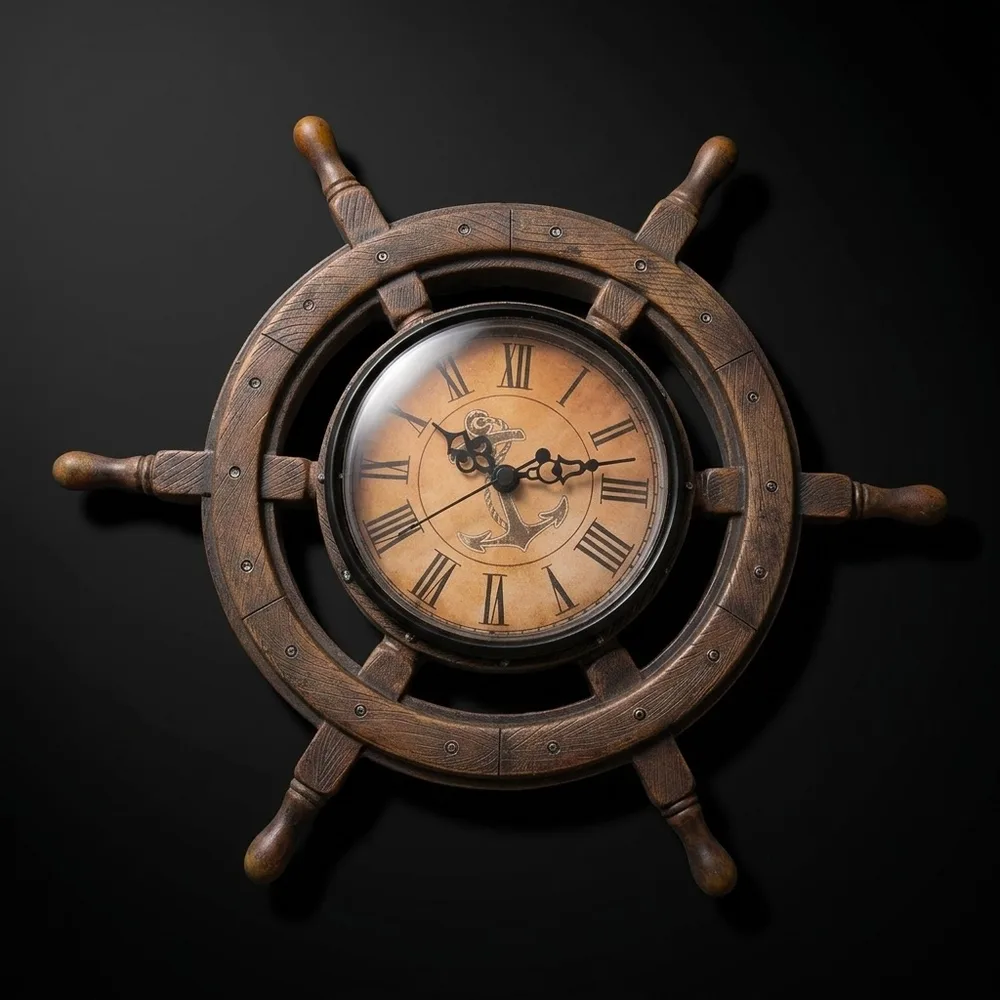
Catalogue reference: DialX 12.0. Listed material: Cast Resin.
Check the current product page and ask for model-specific dimensions, packaging and suitability before ordering.
Explore Antiqula’s wall clocks catalogue
Catalogue examples were checked against Antiqula’s product records on 2026-10-02. Research sources provide context; they do not certify the performance of individual catalogue products.