Choosing an Hourglass for Timing, Gifting and Display
Compare duration, frame, visibility and handling when selecting brass hourglasses for desks, shops and interiors.
Keep the interval, overall height and frame format separate when comparing hourglasses for an activity or interior.
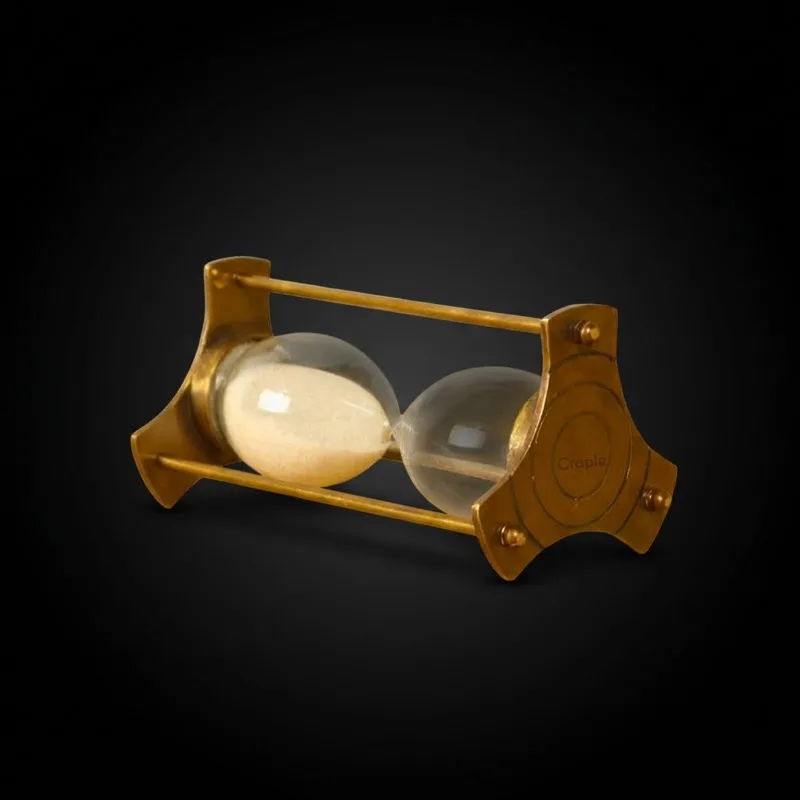
Three questions help narrow an hourglass selection: how long should it run, how large should it look and how should it be handled? These questions are related, but they are not interchangeable. A larger frame does not automatically mean a longer interval, and a dramatic display object may be inconvenient to turn repeatedly during an activity.
Use the catalogue reference to keep the comparison specific. Antiqula’s HourX 1.0 is listed at one minute, while HourX 2.0 and HourX 2.1 are listed at two minutes. Their forms and dimensions differ, so the interval alone does not explain the entire choice.
For a game or a short pause, decide the intended interval before browsing finishes. Ask whether someone will watch the sand or needs an alert when the interval ends. An hourglass provides a visual cue; it does not ring or announce completion. That distinction matters when a person is likely to look away.
For a decorative display, the listed duration may be secondary. It is still worth showing accurately on the label, because visitors may turn the object and ask what it does. Do not assume a display timer is calibrated for precise measurement or appropriate for safety-critical timing.
A catalogue can mix centimetres and inches. HourX 1.0 lists a height of 10.5 centimetres; the hourx-2-1 record expresses its height in inches within the specifications. Preserve the original units and convert only when a common scale is helpful. Do not compare bare numbers without checking their unit.
Measure the available desk or shelf space, including the base and the room needed to turn the object. Overall height is only one part of fit. A wide wooden base can occupy more surface area than a taller narrow pillar frame.
A conventional frame is normally turned as an object. A rotating mount offers a different interaction, but its permitted movement and stopping position need to be confirmed. Ask for a demonstration of the selected model rather than assuming a decorative joint is designed for repeated free rotation.
| Priority | Useful starting point | Additional check |
|---|---|---|
| Short visible interval | Documented short-duration model | Practical sample timing and readability |
| Compact desk display | Modest height and footprint | Space for safe grip and turning |
| Deliberate turning interaction | Confirmed rotating mount | Clearance and resting position |
| Interior composition | Form and finish suited to the setting | Contrast of sand, glass and background |
These priorities help explain a choice without ranking all timers by size. A compact object can be the better display if it fits the scale of the furniture. A larger piece may suit a distant view while being less convenient for frequent use.
Watch the sand from the normal viewing position. A bright colour can look different against a light wall, a dark desk or a busy shelf. Reflections on the glass may hide the flow even when the colour itself is strong. Try the object under ordinary room lighting.
A compass or ornamental base adds another point of interest. Keep that feature separate from the timer’s duration in the description. For a combined piece, explain which part the user is meant to read and how the object should be oriented during use.
If timing is central, observe several runs using a consistent start and a reliable reference clock. Treat the result as a practical sample check and ask about expected variation; do not turn it into a precision guarantee. If appearance is central, inspect the piece in the intended display before multiplying the order.
A clear comparison sheet records duration, height with units, footprint, frame, finish and confirmed presentation. Those fields make the choice easier to explain to a gift recipient or retail customer. The right hourglass is the one whose interval and interaction belong in the setting you have chosen.
Catalogue reference: HourX 1.0. Listed material: Brass & Glass.
Check the current product page and ask for model-specific dimensions, packaging and suitability before ordering.
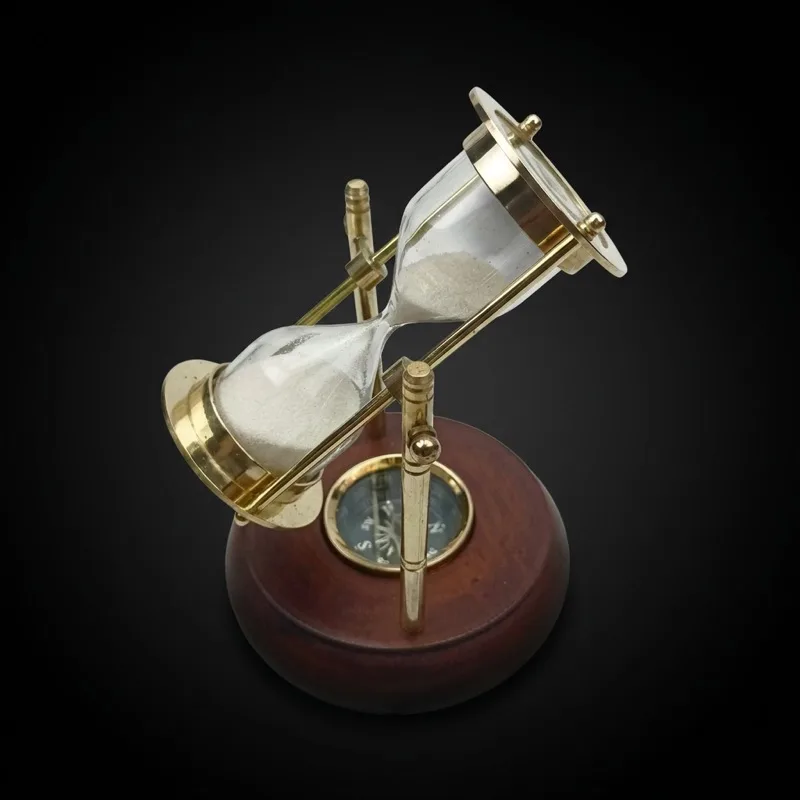
Catalogue reference: HourX 2.0. Listed material: Brass, Wood & Glass.
Check the current product page and ask for model-specific dimensions, packaging and suitability before ordering.
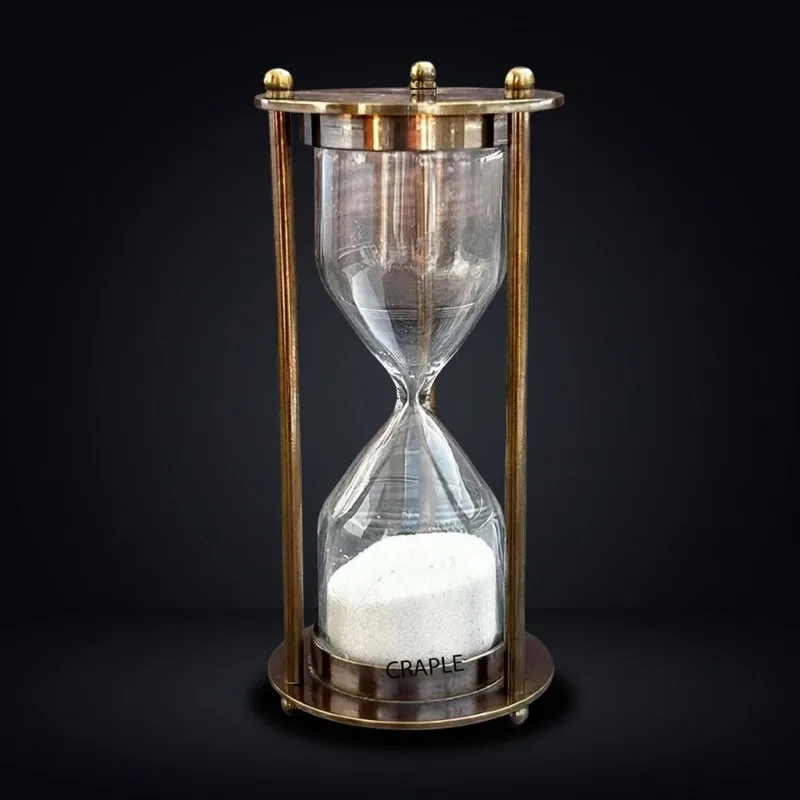
Catalogue reference: HourX 2.1. Listed material: Brass & Glass.
Check the current product page and ask for model-specific dimensions, packaging and suitability before ordering.
Explore Antiqula’s sand clocks catalogue
Catalogue examples were checked against Antiqula’s product records on 2026-10-02. Research sources provide context; they do not certify the performance of individual catalogue products.