Choosing an Hourglass by Duration, Size and Display Style
Keep the interval, overall height and frame format separate when comparing hourglasses for an activity or interior.
Compare duration, frame, visibility and handling when selecting brass hourglasses for desks, shops and interiors.
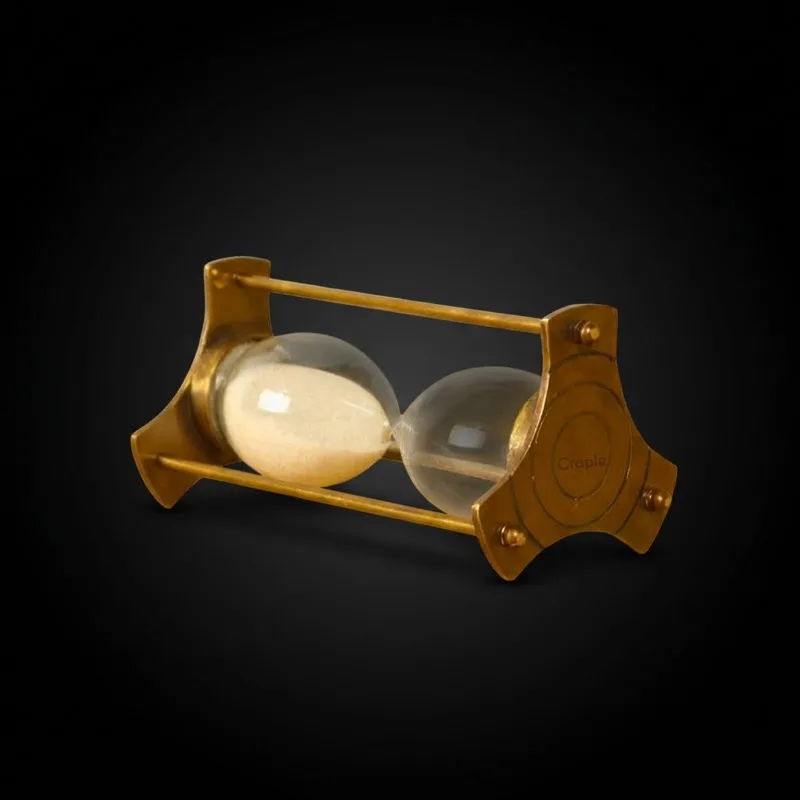
An hourglass makes an interval visible. Unlike a clock face, it shows time as material moving from one chamber into another. That makes it attractive for a desk, a small activity or a display about time. It also means the intended interval should be chosen deliberately: a short timer and a large decorative object need not have the same role.
Antiqula’s sand-clock records include different listed durations, pillar frames, rotating mounts and combinations with wood or a compass. Treat the duration as a model specification, then establish whether its performance is suitable for the intended activity. Decorative timers should not be presented as calibrated equipment for medical, laboratory or other precision-critical use.
Write down what the user wants to time. A brief pause, turn in a game or informal desk routine may need only a short visible interval. A display may be selected primarily for its shape. Avoid assuming that an attractive hourglass will provide the correct duration for an activity simply because the sand flow feels slow or fast when watched.
Ask how the interval will be started and ended. A person must turn the object and notice when the flow finishes. If an audible alert is essential, an hourglass alone does not provide it. Choose it where the visible passage is part of the experience rather than promising the behaviour of an electronic timer.
HourX 1.0, product ID hourx-1-0, is listed as a one-minute brass-and-glass piece with a height of 10.5 centimetres. HourX 2.0 is a two-minute rotating form with a wooden base, listed at 12.7 centimetres high. These examples show why size and interval need separate fields in a comparison.
Do not assume a larger object always runs longer. Ask for the duration of the exact reference and preserve the units in its dimensions. Some catalogue measurements are supplied in inches and others in centimetres. Convert carefully if you need a common comparison, and keep the original value visible on the selection sheet.
A pillar frame creates an open view of the glass and gives the object a recognisable upright outline. A rotating mount changes the way the timer is restarted: the glass assembly may turn within its support rather than requiring the whole object to be lifted. Confirm the intended handling method for the selected design.
A wooden base can visually connect the timer to other desk accessories. A compass adds another detail that should be described separately from duration. HourX 2.0’s record lists a working compass; that information does not establish the timer’s accuracy or turn the combined object into professional navigation equipment.
| Form or feature | What it changes | What to check |
|---|---|---|
| Open pillar frame | Clear view and simple upright silhouette | Stable contact with the surface and safe grip |
| Rotating mount | Restarting interaction | Permitted movement and how the assembly rests |
| Wood-and-brass combination | Material character and base footprint | Care requirements for both materials |
| Compass addition | A second visual or functional detail | Its exact status and viewing position |
| Coloured sand | Visual contrast against the setting | Confirmed colour for the ordered reference |
The sand must be visible against the room and its own glass. A colour that looks vivid in a close-up photograph may be harder to follow at a distance. For a desk activity, test the timer from the user’s normal seat. For a retail display, allow enough room around the glass that its shape remains understandable.
A dark finish can create a strong outline, while polished brass may reflect surrounding light. The choice is aesthetic, but the reflections can affect how clearly the flow is seen. Keep direct glare away from the main viewing position and avoid crowding the timer among several equally reflective objects.
For an informal activity, compare several runs with a reliable reference clock using the same starting method. Record what you observed and ask the supplier about expected variation if that matters. A few sample runs are a useful buying exercise, not a certification of accuracy across a whole production batch.
Do not dismantle or alter the glass to adjust the interval. If the model does not suit the activity, choose a different documented duration or a more appropriate timer. Avoid claiming that decorative glass, sand colour or frame material guarantees precise timing.
An hourglass is often handled more than a static ornament. Place it where the person can grip the intended frame area without knocking a lamp or nearby objects. Do not treat the glass chamber as a carrying handle. For a rotating form, leave enough clearance for the permitted movement.
For a shop, demonstrate the restart once and show how the item is returned to its stable position. If handling is not intended, make the display self-explanatory with a short label. Record whether the piece needs protective packaging for transport, especially where glass sits close to projecting frame details.
Care needs to account for every material in the object. A treatment suitable for brass may be unsuitable for a wooden base or a glass assembly. Ask for finish-specific instructions and begin with gentle surface dust removal rather than automatically reaching for metal polish.
The Canadian Conservation Institute explains that polishing can remove metal and change fine detail. A deliberately aged finish should not be brightened without a reason. Keep liquids and abrasive compounds away from joints and the enclosed timing chamber unless the supplier gives appropriate instructions for that exact construction.
For a gift shop, organise the selection by duration and form instead of placing several near-identical finishes in one unexplained row. A compact one-minute timer and a rotating two-minute form have understandable differences. Add another reference when it contributes a new interval, presentation or visual role.
Use clear labels: listed duration, material, height, mount and included packaging. Do not attach claims about productivity, therapy or medical benefit to the object. If a custom sand colour is requested, confirm the option and current order conditions for the selected reference rather than assuming it is available across the entire range.
Choose the interval first when the timer will support an activity, and the scale first when it will anchor a display. Then inspect visibility, stability and the turning interaction. Confirm the selected model’s packaging and care instructions before ordering.
An hourglass does not need exaggerated promises to be engaging. Its appeal is the visible interval, the frame around it and the deliberate action of turning it. A well-matched duration and a comfortable place to use it make those qualities more useful.
Catalogue reference: HourX 1.0. Listed material: Brass & Glass.
Check the current product page and ask for model-specific dimensions, packaging and suitability before ordering.
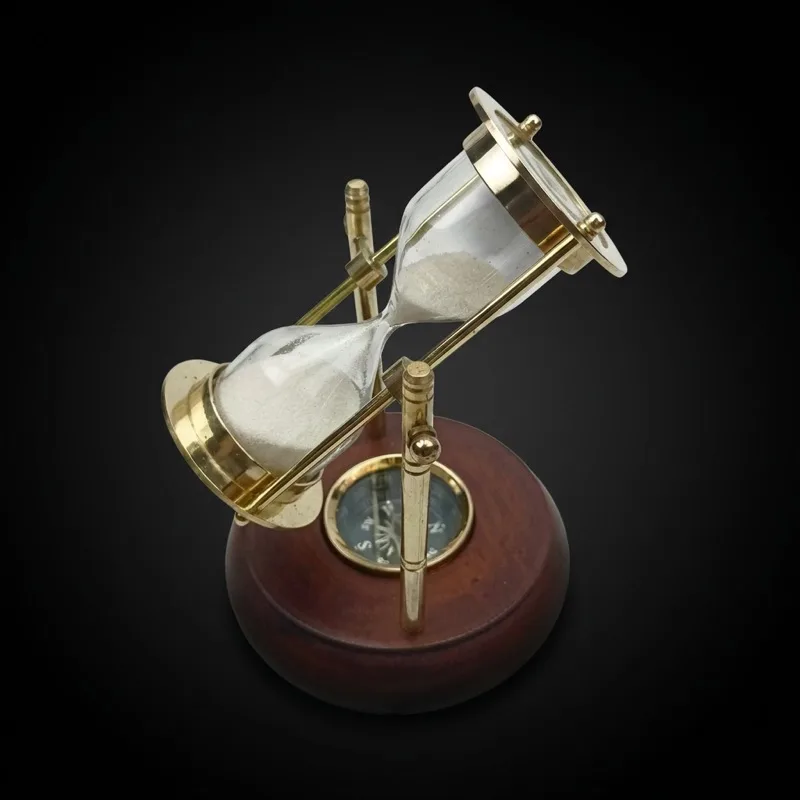
Catalogue reference: HourX 2.0. Listed material: Brass, Wood & Glass.
Check the current product page and ask for model-specific dimensions, packaging and suitability before ordering.
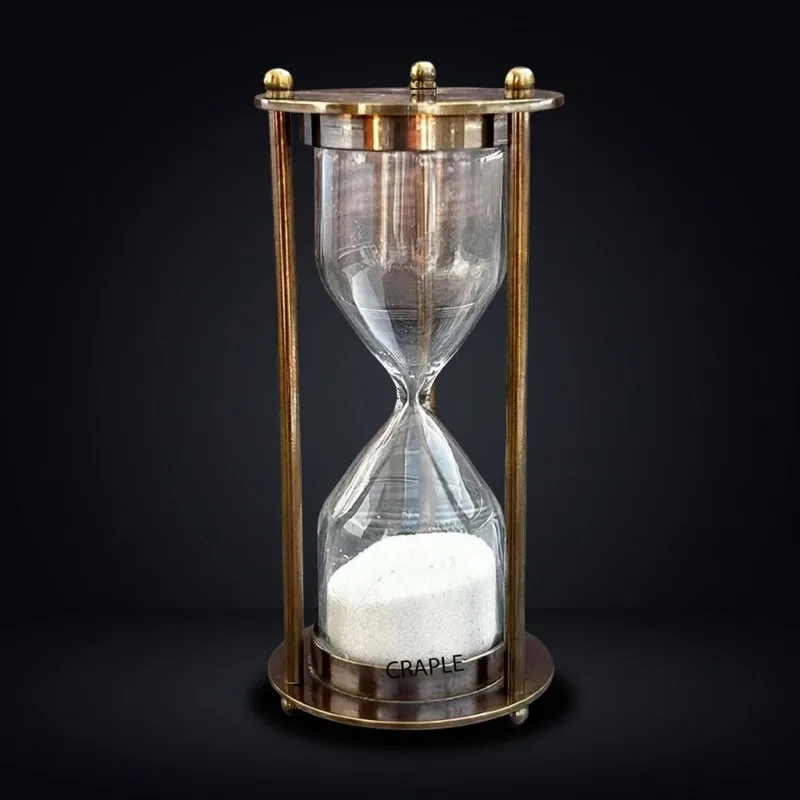
Catalogue reference: HourX 2.1. Listed material: Brass & Glass.
Check the current product page and ask for model-specific dimensions, packaging and suitability before ordering.
Explore Antiqula’s sand clocks catalogue
Catalogue examples were checked against Antiqula’s product records on 2026-10-02. Research sources provide context; they do not certify the performance of individual catalogue products.