Why Sundial Time Can Differ from Clock Time
Separate apparent solar time, time zones and daylight saving before judging a sundial against a phone or wall clock.
Understand dial layout, orientation and presentation before choosing a sundial as a gift, teaching object or decorative instrument.
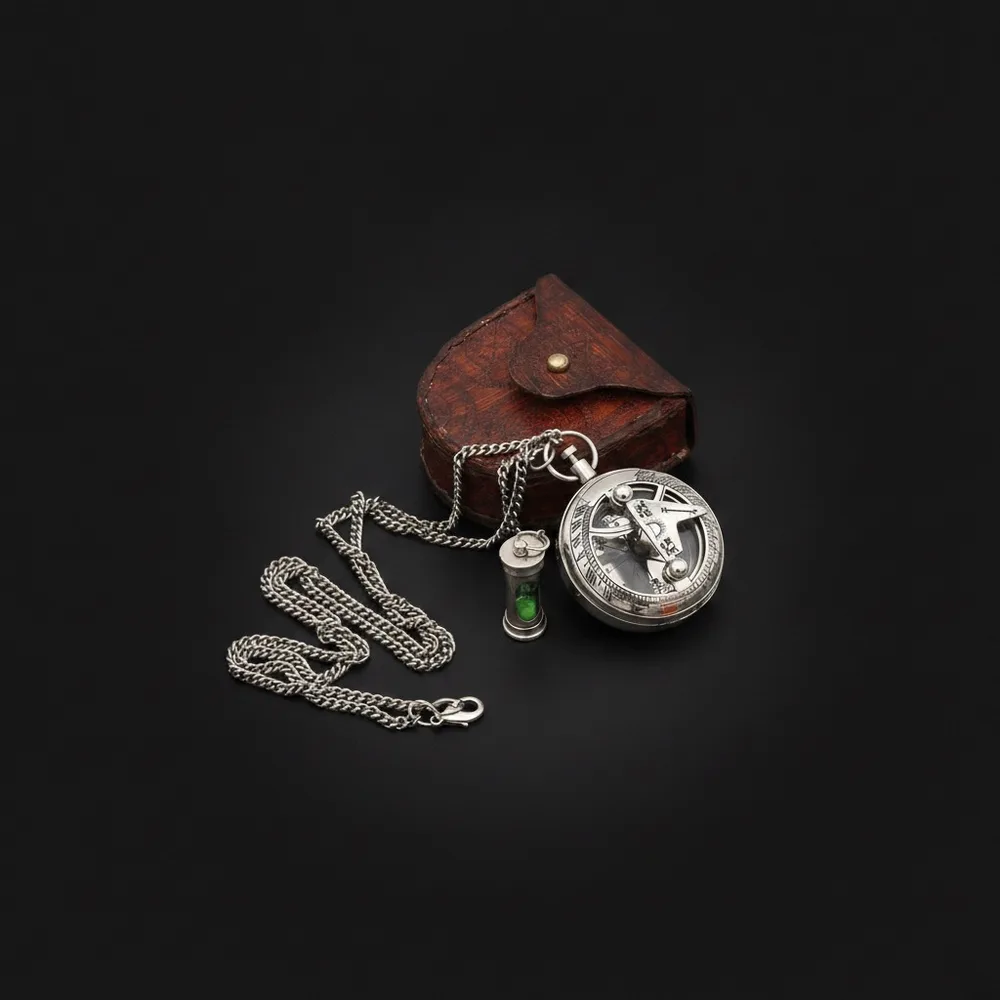
A sundial makes time visible through a moving shadow. That simple idea gives the object its appeal, but a sundial is not simply a clock face without a battery. Its layout, orientation and intended location matter. A compact brass reproduction can be a fascinating gift even when its timekeeping suitability has not been established. Explain those two roles separately.
Antiqula’s sundial catalogue includes compact gift forms, with pendant and case presentations among the examples. Use the current model record to choose appearance and packaging, then request information about the dial geometry if actual time-reading is part of the brief. A compass or engraved scale does not by itself guarantee accurate results at every latitude.
The part that casts the shadow is commonly called the gnomon. Its shape and relationship to the hour markings matter to how a dial is read. On a reproduction, identify which part is intended to perform that role and whether it must be unfolded or positioned before use. Decorative markings can resemble working scales without providing enough information to establish a usable instrument.
Different dial designs use different geometry. A flat dial, a ring-like form and a portable instrument should not be treated as interchangeable. Ask what type the selected model represents, where it is intended to be used and whether any adjustment is required. A historic explanation of sundials describes principles; it does not verify an individual reproduction.
A recipient interested in historical instruments may value the object’s form and the questions it raises. A teacher may want a clearly demonstrable shadow and an explanation of apparent solar time. A garden display may need weather suitability and a permanent installation arrangement. Those are distinct selection briefs.
For a desk gift, start with the size of the object, how it opens and whether the case offers an attractive presentation. For an outdoor installation, ask about materials, finish, exposure and fixing. Do not assume brass styling means that every component can remain outdoors. Hinges, adhesives, cases and mixed materials deserve separate consideration.
Many sundials must be aligned correctly and set on a suitable plane to show useful time. Their design may also correspond to a particular latitude. Ask the supplier for the selected model’s setup instructions and intended operating conditions. If those details are unavailable, present it as a decorative reproduction rather than promising a working timekeeper.
A built-in compass can assist orientation in some designs, but it indicates magnetic direction rather than automatically resolving every alignment requirement. Nearby metal can also affect a compass. Do not treat a compass dial as an all-purpose calibration system. Explain the setup that is actually documented for the model.
| Selection point | Why it matters | What to establish |
|---|---|---|
| Dial form | Determines how the shadow and markings relate | The design represented and any setup steps |
| Dimensions | Affects reading and gift presentation | Open and closed measurements where relevant |
| Case | Influences storage and unboxing | Whether it is included for the reference |
| Intended use | Changes the evidence required | Decorative, teaching or documented time-reading role |
| Exposure | Affects finish and components | Whether the model is suitable for outdoor use |
Keep visual preference separate from these checks. A heavily engraved surface may be beautiful but less easy to read than a simpler layout. A polished finish may produce reflections in bright sunlight. Assess the selected object in the conditions where it will be shown rather than judging only a studio photograph.
A short caption can turn a decorative sundial into an engaging object. Describe it as a contemporary reproduction, identify the shadow-making part and explain that sundial time and civil clock time are different systems. Invite curiosity without giving visitors a false expectation of exact agreement with their phones.
For an indoor display, remember that ordinary room lighting is not the Sun. A shadow under a lamp may illustrate a principle, but it does not demonstrate correct solar timekeeping. If the object is placed in a window, consider reflections, nearby heat and whether visitors may handle it. Avoid creating a display in which optical instruments nearby could be aimed at the Sun.
The Royal Observatory Greenwich’s educational material explains the relationship between observed solar time and mean solar time. A sundial can disagree with a clock because of the equation of time, the location within a time zone and daylight-saving arrangements. Setup or unsuitable geometry can add further differences.
This does not mean every discrepancy is normal or every reproduction is accurate. It means that a fair evaluation needs to distinguish the underlying time systems from the object’s construction and alignment. For a customer who expects precise time-reading, request a documented method and model-specific information before presenting it as suitable.
A sundial often contains fine markings that give it visual character. The Canadian Conservation Institute distinguishes cleaning from polishing: abrasive polishing can remove material and alter details. Do not prescribe frequent polishing as a universal routine, especially when a finish or patina is part of the intended appearance.
Begin with supplier guidance for the exact finish. Keep cases and mixed materials in mind when choosing any treatment. Avoid forcing hinges or folding parts. Store a portable piece so the shadow-making element is not bent or pressed against another object. A well-supported case can be useful storage as well as attractive presentation.
A useful shortlist states the dial form, size, finish, confirmed case and intended role. Where time-reading has been verified, describe the documented setup and its limits. Where it has not, say that the piece is a decorative reproduction with historical instrument styling.
That distinction does not diminish the object. It helps the recipient enjoy it for the right reasons and gives a retailer a clear explanation. Select the piece whose proportions and presentation fit the setting, then confirm its capabilities separately.
Catalogue reference: SunBlaze 1.5.0. Listed material: Brass.
Check the current product page and ask for model-specific dimensions, packaging and suitability before ordering.
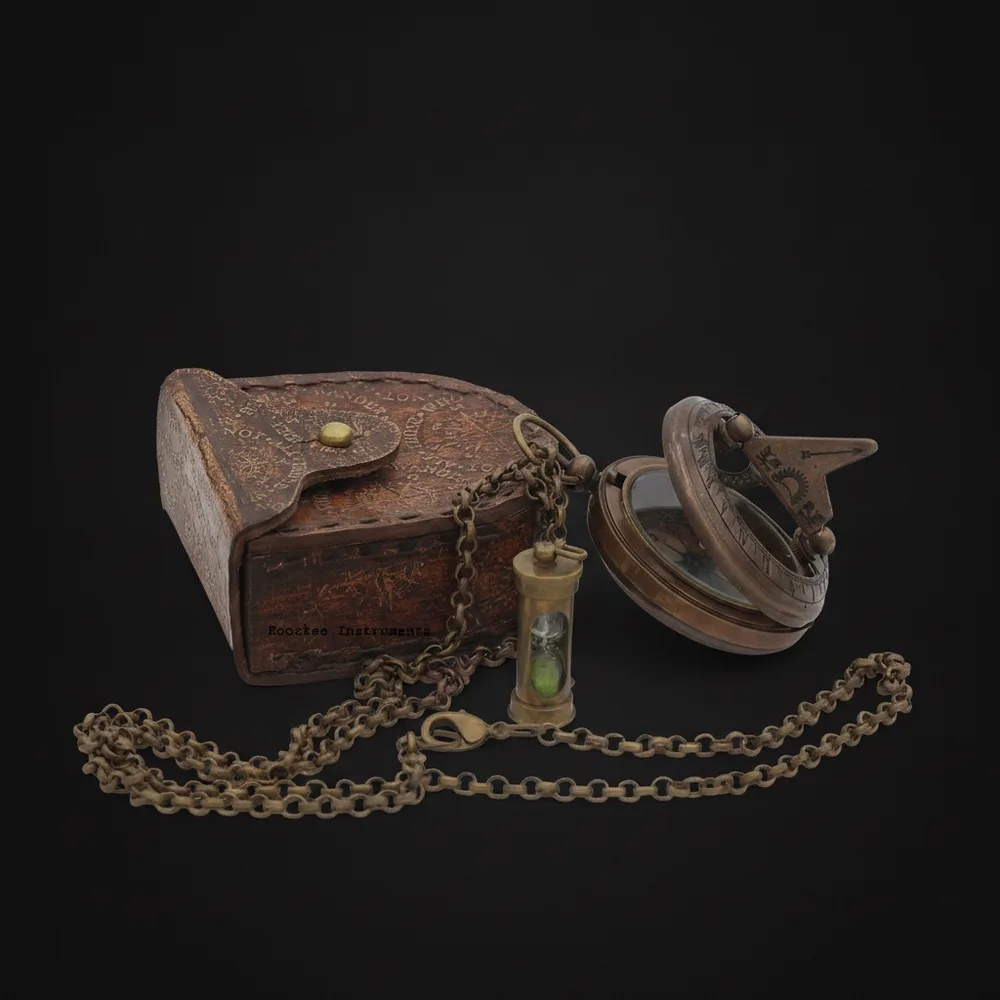
Catalogue reference: SunBlaze 1.5.1. Listed material: Brass.
Check the current product page and ask for model-specific dimensions, packaging and suitability before ordering.
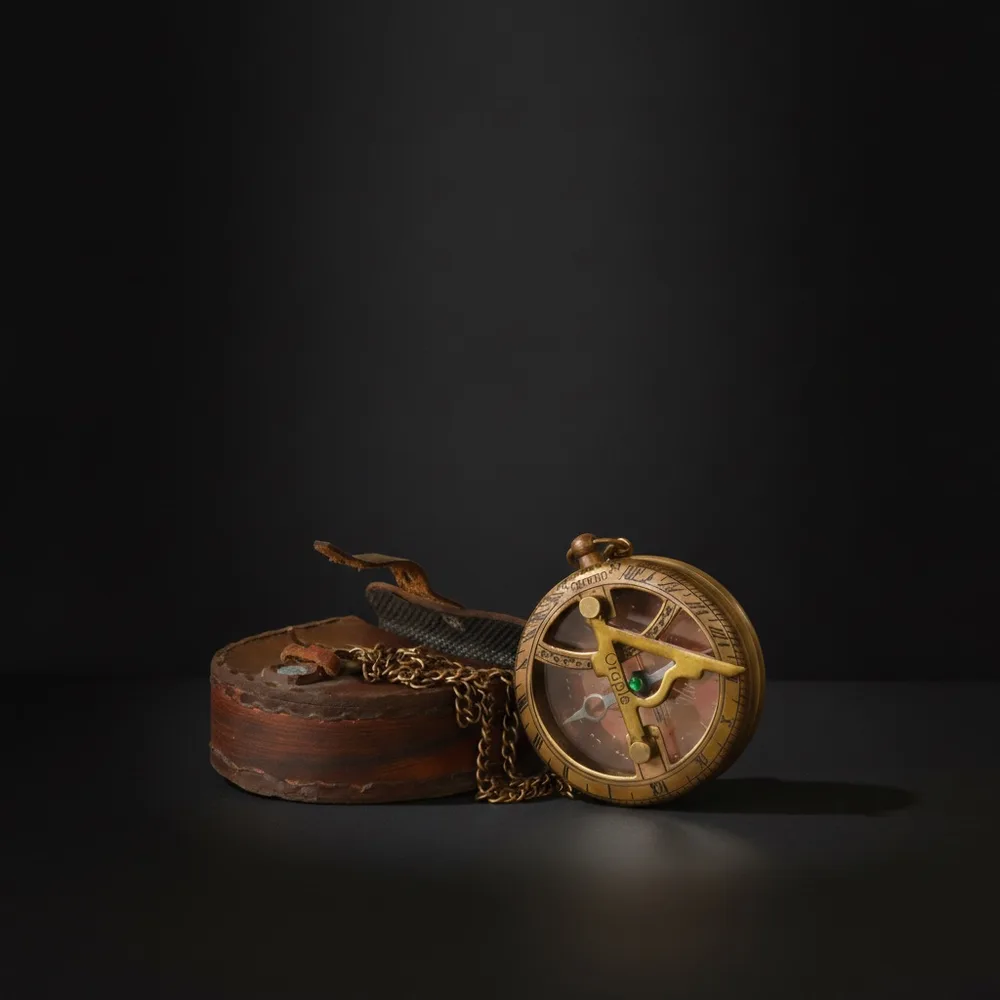
Catalogue reference: SunBlaze 1.5.2. Listed material: Brass.
Check the current product page and ask for model-specific dimensions, packaging and suitability before ordering.
Explore Antiqula’s sundials catalogue
Catalogue examples were checked against Antiqula’s product records on 2026-10-02. Research sources provide context; they do not certify the performance of individual catalogue products.