Choosing and Displaying a Reproduction Sundial
Understand dial layout, orientation and presentation before choosing a sundial as a gift, teaching object or decorative instrument.
Separate apparent solar time, time zones and daylight saving before judging a sundial against a phone or wall clock.
If a sundial and a phone show different times, the difference does not immediately tell you whether the sundial is faulty. A clock usually reports civil time for a time zone. A sundial, when its design and setup are suitable, relates to the Sun’s apparent position at a particular place. These are related systems, but they are not identical.
The distinction is useful when explaining a reproduction sundial as a gift. It also prevents the opposite mistake: excusing any result simply because sundials are different. First understand the time systems, then check whether the individual object has a documented design and setup for actual time-reading.
Local apparent solar noon is associated with the Sun crossing the local meridian. A sundial’s shadow changes with the apparent movement of the Sun, so it can represent this local solar relationship. A civil clock does not normally reset itself to the solar conditions at each individual location.
The Royal Observatory Greenwich’s coursework material uses shadow-stick and sundial observations to explain the conversion between observed solar time and mean solar time. It is a helpful source for the principle, but it does not establish that any particular reproduction has the geometry required to make those observations accurately.
The Sun’s apparent time does not progress uniformly against an idealised mean solar clock throughout the year. The equation of time expresses that difference. Its value changes with the date, so a comparison made on one day is not a universal correction to apply forever.
For a display caption, a plain explanation is usually enough: a sundial follows apparent solar time, while clocks use a more uniform system. Avoid printing a single correction figure without a date and a clear method. If an article or instruction sheet gives a correction table, check its convention and how it is intended to be applied.
Locations across a time zone share a civil-time convention, but they do not all experience local solar noon simultaneously. The observer’s longitude therefore affects the relationship between local solar time and the zone’s clock time. Two correctly set instruments in different towns can show different relationships to the same civil clock.
Daylight saving adds another civil adjustment where it is observed. It changes the displayed clock time by convention; it does not change the Sun’s position or the shadow cast by a gnomon. A buyer comparing a dial with a phone should account for that arrangement rather than treating the phone display as a direct solar reference.
| Possible cause | Kind of issue | Useful next check |
|---|---|---|
| Equation of time | Date-dependent solar relationship | Consult a reliable dated correction method |
| Longitude within a time zone | Location-dependent civil convention | Establish the observation location |
| Daylight saving | Civil-clock adjustment | Check the clock’s current setting |
| Alignment or tilt | Instrument setup | Follow the model’s documented instructions |
| Unsuitable dial geometry | Design or intended use | Ask about latitude and operating conditions |
This table is a diagnostic framework, not a claim that every decorative sundial can be calibrated. Some objects are sold primarily for their historical appearance. If the operating instructions, intended latitude or dial design are unclear, do not promise exact timekeeping.
For a decorative gift, say what is visible and confirmed: form, finish, markings and included case. Explain that sundials represent time differently from modern clocks. For a teaching object, request a clear setup method and demonstrate the principle under suitable conditions.
The strongest explanation is both curious and restrained. A difference from a clock can open a conversation about the Sun, geography and human time conventions. It should not be used to invent accuracy claims for an untested reproduction or to hide a setup problem that needs investigation.
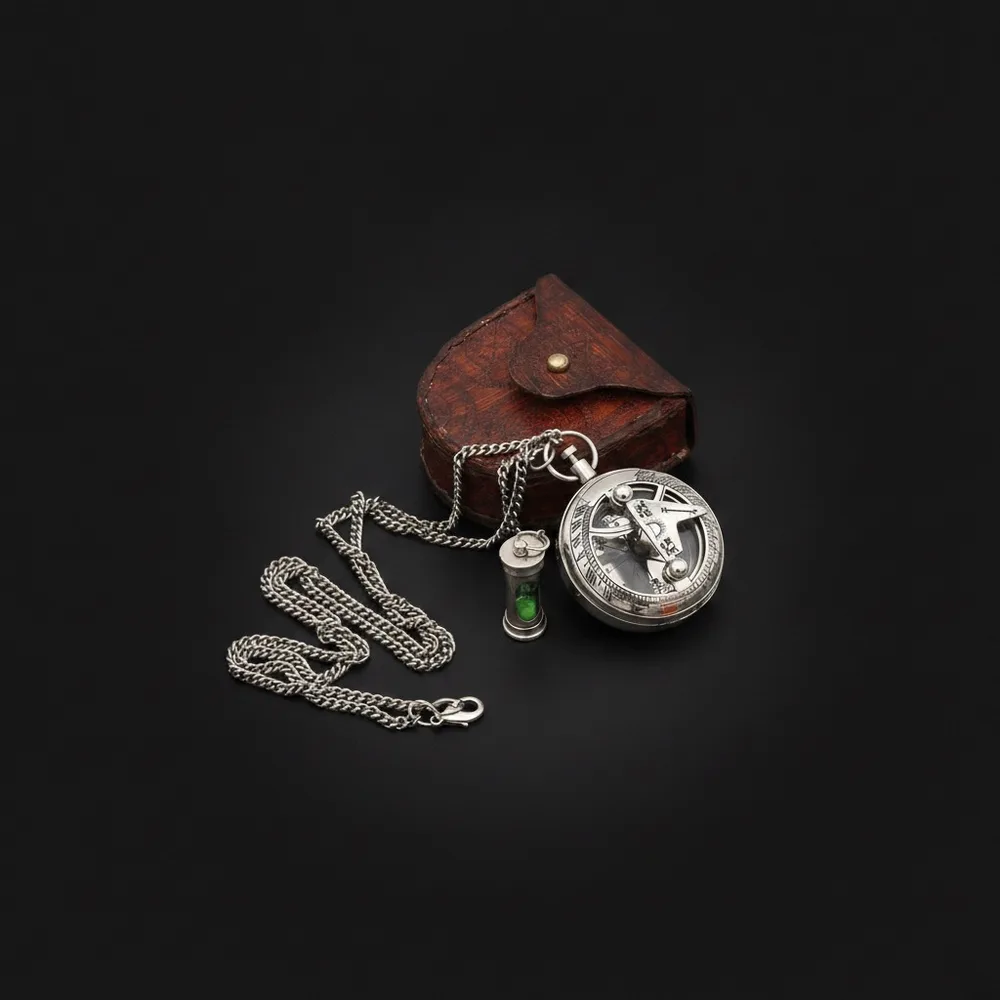
Catalogue reference: SunBlaze 1.5.0. Listed material: Brass.
Check the current product page and ask for model-specific dimensions, packaging and suitability before ordering.
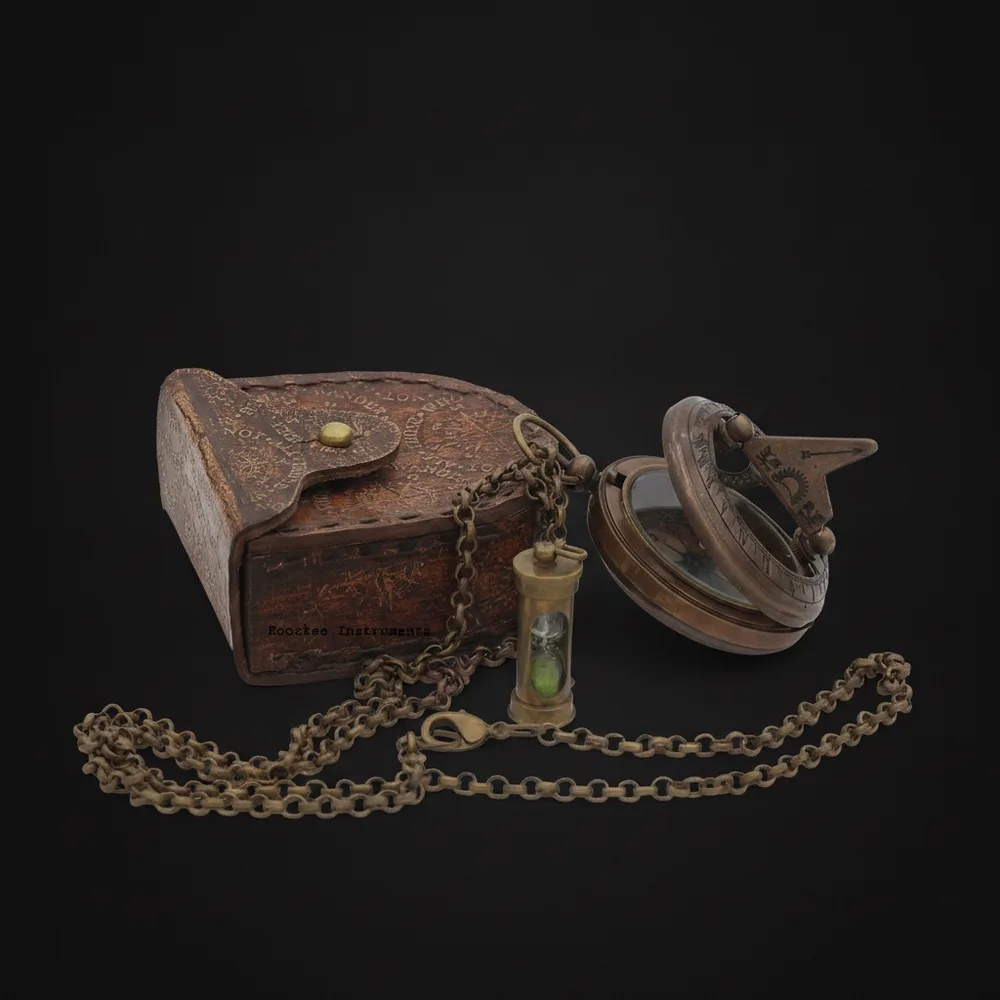
Catalogue reference: SunBlaze 1.5.1. Listed material: Brass.
Check the current product page and ask for model-specific dimensions, packaging and suitability before ordering.
Explore Antiqula’s sundials catalogue
Catalogue examples were checked against Antiqula’s product records on 2026-10-02. Research sources provide context; they do not certify the performance of individual catalogue products.