Choosing a Brass Table Clock for a Desk, Shelf or Gift
Choose a desk clock by readability, viewing angle, case form and its verified movement, with clear distinctions between decorative and working compass details.
Understand decorative compass backs, separate working dials and simple clock faces before choosing a combined desk object.
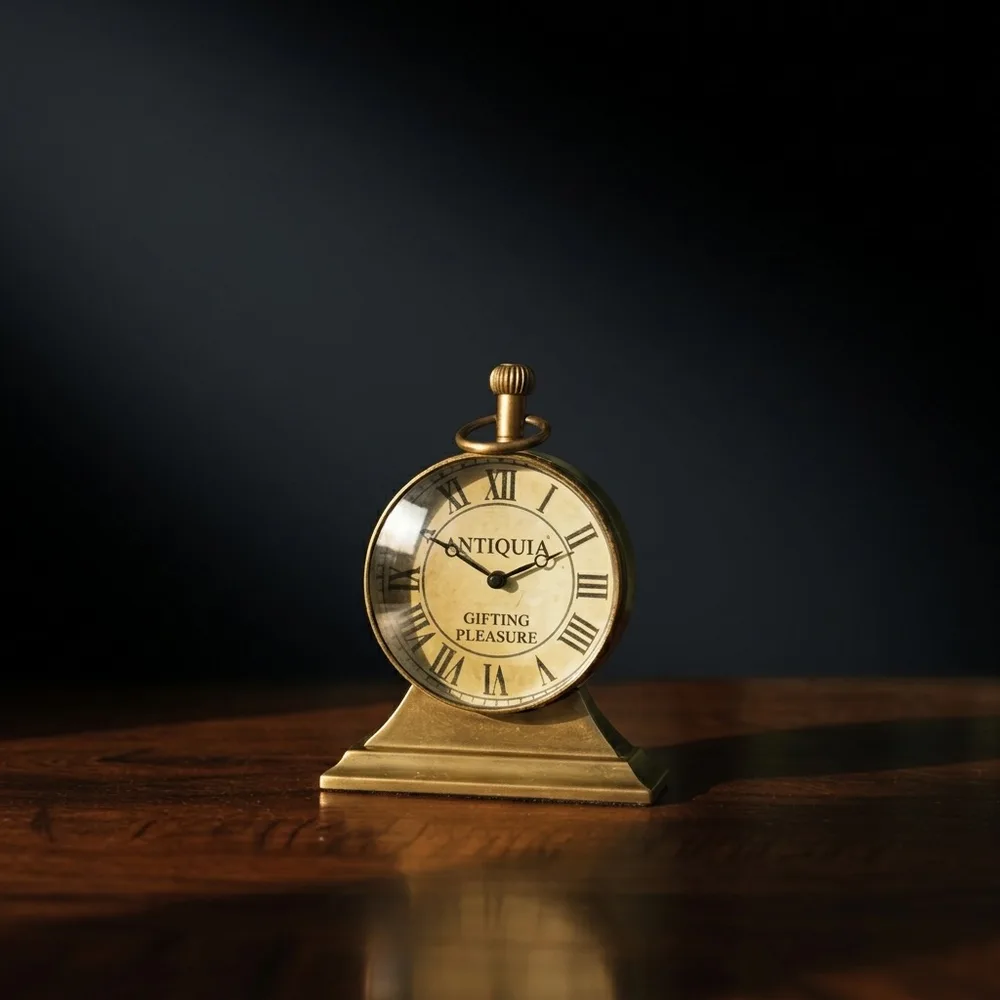
A compass motif can give a desk clock a navigation theme, but it can mean several different things. One product may carry a decorative dial on its reverse. Another may contain a working compass in a separate position. A simple clock may omit the motif entirely. Compare these arrangements by what the user actually sees and does.
Antiqula’s Magnus 3.0 is a useful example of why the distinction matters. Its name mentions a compass dial back, but the product description says that the dial is decorative. The clock’s quartz time display remains the practical feature. Do not turn that naming detail into a promise of a working navigational tool.
Most desk objects have a preferred orientation. If the clock faces a seated person, its reverse may face a wall or monitor. A decorative back can still be attractive when the object is handled or displayed on an open shelf, but it may contribute little to daily use on a conventional desk.
For a model with a separate working compass, inspect where that dial sits and whether it can be read without moving the clock. A combined object is easier to understand when each feature has a clear position. Ask for photographs from the normal viewing angle, not only an overhead studio view.
| Design | Main benefit | Selection question |
|---|---|---|
| Clock with decorative compass back | Navigation styling in one compact body | Will the reverse be seen, and is it clearly labelled decorative? |
| Clock with confirmed working compass | Two different functions in one arrangement | Can both dials be read comfortably in the intended position? |
| Simple desk clock | A direct time display with fewer visual elements | Does the face remain readable at the normal distance? |
The comparison does not rank one form above the others. A decorative reverse may be the right gift for a recipient who likes historical instrument imagery. A simple round-glass clock can be more appropriate where the main need is a quiet visual accent with an easily understood face.
A quartz movement in the clock says nothing about the compass detail. Likewise, a working magnetic needle does not establish the clock’s accuracy or quietness. Keep these fields separate on a retailer’s comparison sheet. That small separation prevents a combined name from becoming a combined capability claim.
Ask for model-specific instructions where functionality matters. A desk often contains metal equipment and electronic accessories, so do not advertise a small compass as professional navigation equipment based on a casual desk demonstration. If the feature is decorative, say so directly and let the buyer enjoy the design on that basis.
Imagine the recipient opening the gift, placing it on the desk and setting the time. Does the case need to be lifted from a cradle? Is the reverse accessible? Will a compass dial be hidden after the clock is positioned? An attractive detail is more satisfying when its intended interaction is understood.
For a retail display, show both sides only where doing so is useful. A photograph of the reverse beside the actual object can explain a decorative back without encouraging customers to turn every display piece. Keep the product reference beside that photograph so a similar-looking model is not mistaken for the same arrangement.
A practical label has separate lines for the clock movement, the visible form and the compass status. For Magnus 3.0, that can identify the listed quartz movement and decorative reverse dial. For a simple model, omit compass language rather than implying a missing function. For a confirmed combined model, describe only the operating details established for that reference.
A combined desk object succeeds when its features are easy to understand. Choose the arrangement that fits the recipient’s viewing position and interest, then keep the distinction between function and styling visible in the explanation.
Catalogue reference: Magnus 3.0. Listed material: Solid Brass.
Check the current product page and ask for model-specific dimensions, packaging and suitability before ordering.
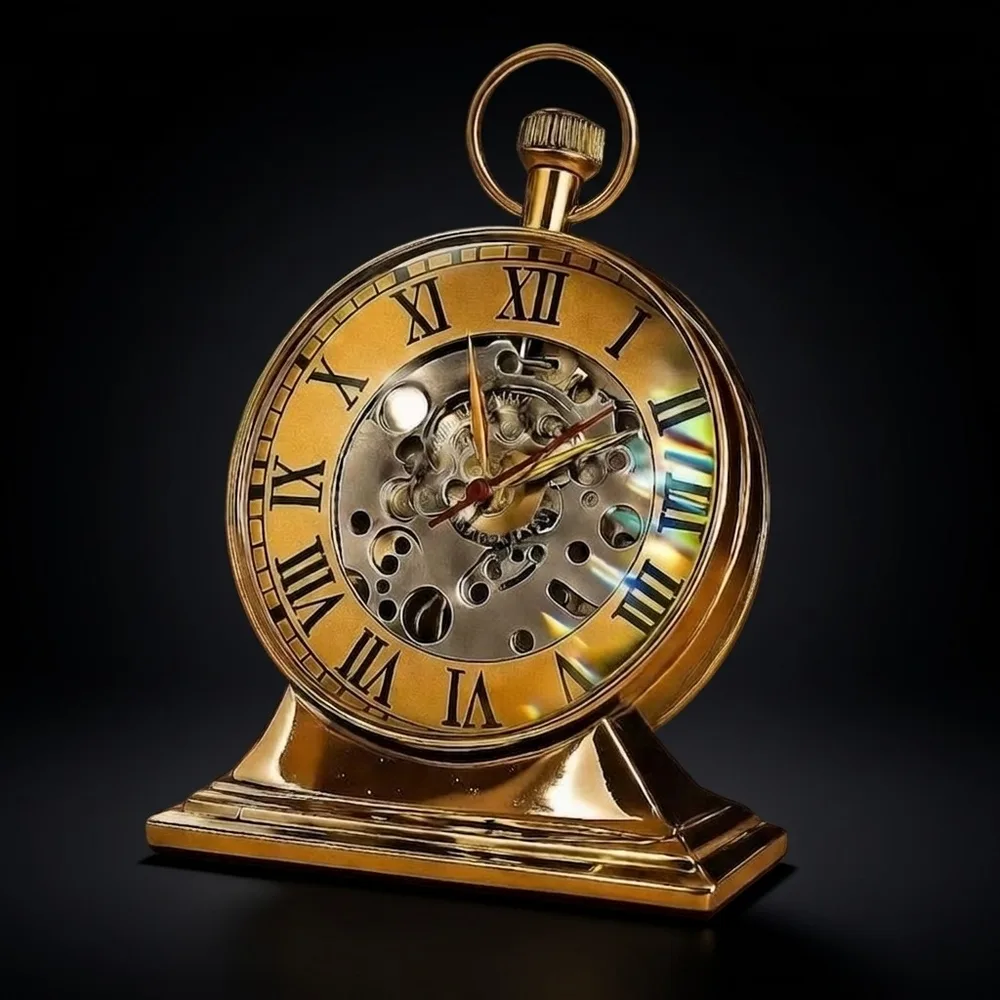
Catalogue reference: Magnus 3.1. Listed material: Solid Brass.
Check the current product page and ask for model-specific dimensions, packaging and suitability before ordering.
Explore Antiqula’s table clocks catalogue
Catalogue examples were checked against Antiqula’s product records on 2026-10-02. Research sources provide context; they do not certify the performance of individual catalogue products.